- The Grind Zone
- Posts
- What Bill Ackman’s Lowest Moment Can Teach Us Before the New Year
What Bill Ackman’s Lowest Moment Can Teach Us Before the New Year

N Amadeus
December 29, 2025

Good morning Grinder,
As the year comes to a close, there's a certain quiet that settles in - even if life itself feels loud. The holidays pass, the celebrations slow down, and suddenly we're left staring at a new calendar with old thoughts still echoing in our heads.
Did this year turn out the way you thought it would? Did you make the right calls - or the ones you're still second-guessing? Did you push forward, or did something knock the wind out of you along the way?
Most people won't admit it out loud, but many of us reach the end of the year carrying a mix of hope and regret. That's why a recent interview I watched stayed with me far longer than I expected. It wasn't inspirational in the typical sense. It was uncomfortable, reflective, and deeply real.
The video is titled "Bill Ackman Shares His Journey of Resilience and Rebuilding After Total Loss." You can watch it here
This isn't a story about easy wins or overnight comebacks. It's about what happens when someone who was once certain - even celebrated - is forced to confront doubt at the highest level.
The Rise That Made the Fall So Painful
To understand why this interview matters, you have to understand who Bill Ackman is. Ackman is not a background figure in finance. He is one of the most visible hedge fund managers of the modern era, the founder of Pershing Square Capital Management, and someone known for taking bold, high-conviction positions when others hesitate.
Early in his career, that boldness worked. He became known as a sharp thinker with strong opinions and the confidence to defend them publicly. Investors trusted him not because he played it safe, but because he didn't. His reputation was built on clarity and conviction.
But conviction can be a double-edged sword. When you're right, it makes you look brilliant. When you're wrong - and the stakes are enormous - the fall is brutal.
Ackman's losses weren't quiet or contained. They were public. They were dissected in headlines. They were debated on television. And over time, they began to erode not just capital, but confidence - both from investors and within himself.
Losing More Than Money
One of the most striking aspects of the interview is how Ackman talks about loss. He doesn't frame it purely in financial terms. He speaks about identity.
When you've spent years being praised for your judgment, your thinking, your ability to see what others don't - what happens when that narrative collapses? What happens when the thing you're known for suddenly feels unreliable?
Ackman describes moments of intense scrutiny, both external and internal. Every decision questioned. Every move analyzed. And perhaps most difficult of all, the creeping sense of self-doubt that follows prolonged failure.
This is the part of the story that resonates far beyond investing. Many people experience a version of this in their own lives - when a career stalls, a business fails, a relationship ends, or a dream doesn't materialize. The loss isn't just what you see on paper. It's the loss of certainty.
The Discipline of Sitting With Failure
What makes Ackman's journey compelling is not that he "bounced back," but how he chose to sit with failure rather than run from it.
In the interview, he talks about slowing down. About revisiting assumptions he once held tightly. About listening more carefully to opposing viewpoints - not as threats, but as information. He didn't abandon his principles, but he did refine them.
This wasn't about reinventing himself for appearances. It was about doing the internal work required to rebuild credibility - with others and with himself.
There's a subtle but powerful lesson here: growth doesn't always come from adding more. Sometimes it comes from removing ego, impatience, or the need to be right.
Ackman didn't rush the process. He accepted that trust, once broken, takes time to repair. That mindset shift alone changed the trajectory of his recovery.
Rebuilding Something Stronger Than Before
Eventually, the work paid off. Pershing Square stabilized. Performance improved. Investors returned. But Ackman emphasizes that the success that followed felt different from the success that came before.
It wasn't fueled by the same kind of certainty. It was steadier. More thoughtful. Less reactive.
What he rebuilt wasn't just a portfolio - it was a process. A way of thinking that accounted for risk, human error, and the limits of even the smartest analysis.
That's what makes his comeback meaningful. It wasn't about proving critics wrong. It was about proving to himself that he could learn, adapt, and lead again without repeating the same mistakes.
What We Can Learn From This Interview
There are several lessons embedded in this conversation, and none of them require managing billions of dollars to apply.
One is the importance of separating outcomes from self-worth. Failure doesn't define you unless you let it replace curiosity with shame.
Another is patience. Real rebuilding doesn't announce itself. It happens quietly, often when no one is watching, and usually without immediate validation.
There's also a lesson about humility - not the performative kind, but the private willingness to admit you might be wrong and stay open long enough to learn why.
Perhaps the most powerful takeaway is this: resilience isn't dramatic. It's consistent. It's the decision to stay engaged when it would be easier to withdraw.
Why This Story Matters at the Turn of the Year
As we approach a new year, many people are setting goals without fully processing what the last year took from them - or taught them.
Bill Ackman's story is a reminder that reflection is not weakness. It's preparation.
Before rushing into resolutions, it may be worth asking deeper questions. What patterns need to change? What beliefs no longer hold up? What version of success are you actually trying to build?
The new year doesn't require reinvention. Sometimes it requires refinement.
If you're entering the new year feeling uncertain, disappointed, or quietly questioning yourself, this interview is worth your time.
Bill Ackman's journey reminds us that setbacks don't mean you've failed - they mean you've been tested. And often, what comes next isn't a return to who you were, but the emergence of someone better equipped for what's ahead.
As the calendar turns, may the coming year be one of clarity, patience, and thoughtful rebuilding - whatever that looks like for you.
Happy New Year,
N. Amadeus
Someone just spent $236,000,000 on a painting. Here’s why it matters for your wallet.
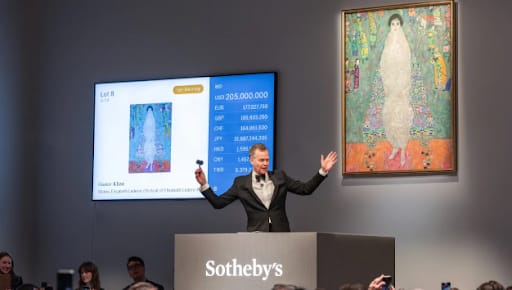
The WSJ just reported the highest price ever paid for modern art at auction.
While equities, gold, bitcoin hover near highs, the art market is showing signs of early recovery after one of the longest downturns since the 1990s.
Here’s where it gets interesting→
Each investing environment is unique, but after the dot com crash, contemporary and post-war art grew ~24% a year for a decade, and after 2008, it grew ~11% annually for 12 years.*
Overall, the segment has outpaced the S&P by 15 percent with near-zero correlation from 1995 to 2025.
Now, Masterworks lets you invest in shares of artworks featuring legends like Banksy, Basquiat, and Picasso. Since 2019, investors have deployed $1.25 billion across 500+ artworks.
Masterworks has sold 25 works with net annualized returns like 14.6%, 17.6%, and 17.8%.
Shares can sell quickly, but my subscribers skip the waitlist:
*Per Masterworks data. Investing involves risk. Past performance not indicative of future returns. Important Reg A disclosures: masterworks.com/cd
Reply